

How did a music format that was fading away in the 1980s become one of the most popular ways to listen in the 21st century? If you've walked into a record store in the last decade, you'll know that vinyl is everywhere again. With Record Store Day around the corner, here's a look back at the history of this cherished medium – from Edison's phonograph to today's vinyl revival.
Key takeaways
- 1877–1888: Thomas Edison's phonograph (cylinders) was followed by Emile Berliner's gramophone (flat discs), which were cheaper to mass-produce.
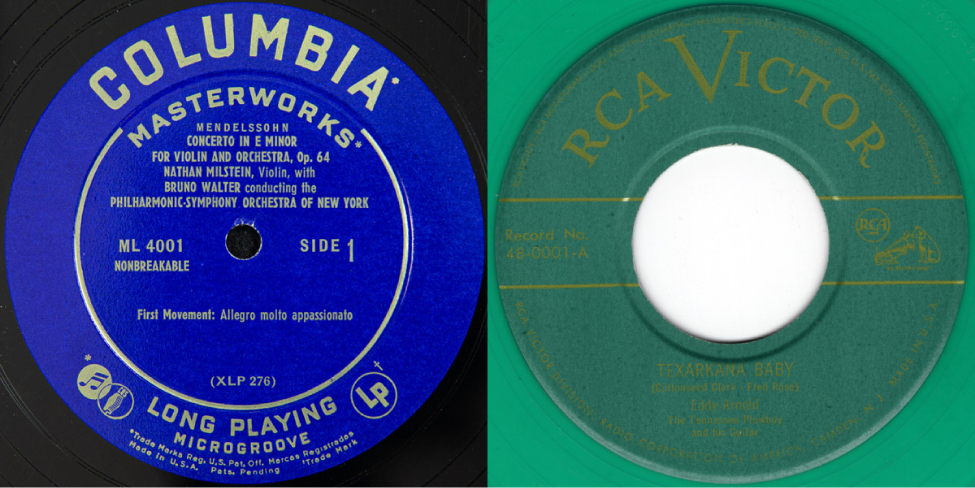
- 1948–1949: Columbia Records introduced the 33⅓ RPM long-playing (LP) record and RCA Victor introduced the 7-inch 45 RPM single – the formats we still use today.
- 1979–2000s: The Sony Walkman, the CD (1982), downloads and streaming pushed vinyl into a niche.
- 2008 onwards: Vinyl sales began climbing again, and by 2021 roughly one in three albums sold in the US was a vinyl LP.
Looking back: the beginnings of recorded music
One of the earliest inventions to play back recorded sound was Thomas Edison's phonograph in 1877 – a device that recorded and reproduced sound using rotating cylinders.
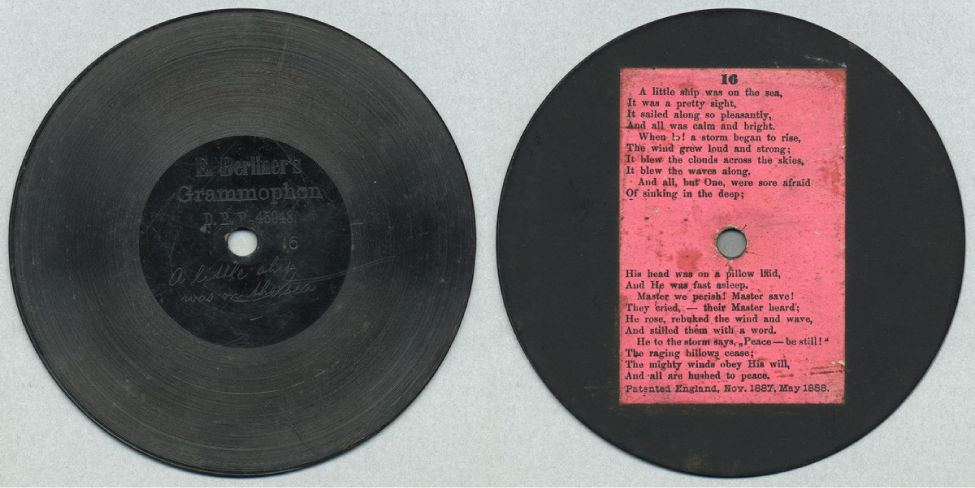
In 1888, German-American inventor Emile Berliner introduced the gramophone. It played flat Berliner discs, five to seven inches across, which held about twice as much as an Edison cylinder. Because discs could be stamped out cheaply while cylinders were difficult to copy, the Berliner disc eventually pushed the cylinder aside.
The first commercial recordings went on sale in the late 19th century, but sales only really took off after 1920, when electrical recording became possible. Records also travelled the world: after D-Day in 1944, American troops brought jazz and big band records with them overseas.
The format wars: 78s, LPs and 45s
Before 1950, records were mostly made of shellac and spun at 78 RPM. That changed in 1948, when Columbia Records introduced the long-playing (LP) record. It spun at 33⅓ RPM and could play up to around 23 minutes per side.
A year later, RCA Victor answered with the 7-inch single spinning at 45 RPM – ideal for hit songs, and later for extended play (EP) records with two songs per side.
These new "microgroove" records were pressed in Vinylite, a polyvinyl chloride (PVC) compound. Compared with shellac, vinyl was far more durable and had much lower surface noise, so records lasted longer and sounded dramatically better.
The fall of vinyl: cassettes, CDs and the digital age
Fast forward to 1979, when Sony released the Walkman and everything changed. Using magnetic cassette tapes, the Walkman let you take your music anywhere – to school, on the bus or to the park – instead of sitting at home in front of a turntable. Vinyl sales took a heavy blow in the years that followed.
Then came the compact disc in 1982. With digital audio and around 74 minutes of uninterrupted playback (Sony reportedly insisted on a length that could fit Beethoven's Ninth Symphony), the CD easily overshadowed vinyl, which many people now saw as scratchy, crackly and expensive. Car makers began installing CD players, and by the mid-1990s CDs dominated music sales.
It didn't stop there. The CD overtook vinyl, illegal downloads then hurt CD sales, and eventually iPods, iTunes and streaming services such as Spotify outsold physical music altogether.
The great vinyl resurgence
Toward the end of the 2000s – around the time Spotify was founded in 2006 – something interesting began to happen. A dedicated community of enthusiasts had never stopped pressing and playing records:
- DJs preferred turntables and vinyl for their feel and for mixing, scratching and transitioning live.
- Hip hop producers dug through old records for samples and grooves.
- Many bands never fully bought into digital formats and kept releasing on vinyl.
- Collectors and audiophiles took pride in their record collections, and rare vintage pressings grew in value.
The numbers tell the story. Global vinyl sales were under $150 million in 1997 and fell to about $30 million by 2006. Then, in 2008, vinyl sales rose for the first time since 1984 – by a remarkable 89%. By 2013, global vinyl sales were worth nearly $220 million, and in 2021 vinyl sales in the US alone passed $1 billion, with roughly one in three albums sold in the US being a vinyl LP.
Why do we still love vinyl?
If listening to music were only about convenience, vinyl would never have survived the technologies that came after it. But records offer something more: a sense of ritual and nostalgia that continues to draw in listeners young and old. Large-format album artwork and the joy of collecting also make records a great gift.
Events such as Record Store Day, held each April, celebrate independent record shops, and artists mark the occasion with special limited-edition releases.
NAD and the turntable
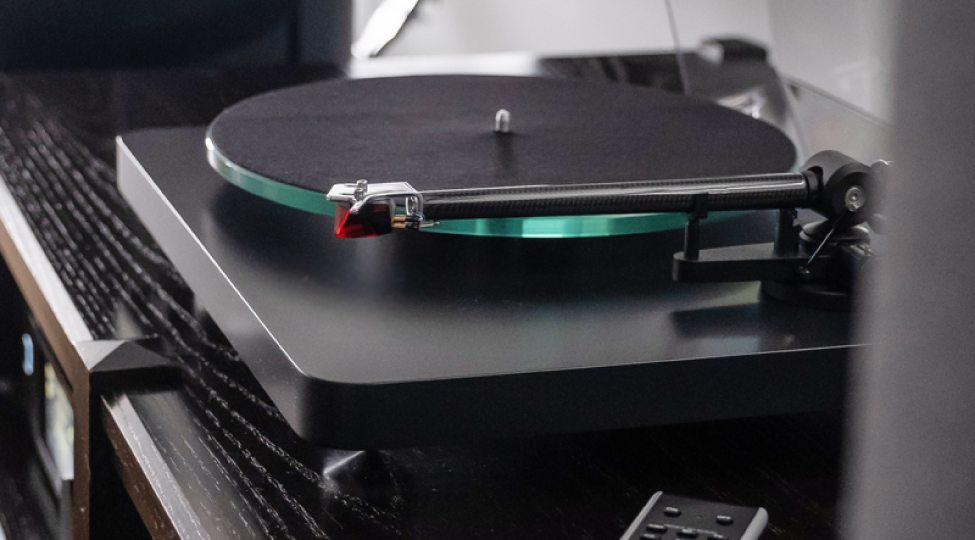
Although turntable technology has improved over the years, its fundamental mechanics haven't changed much since the turntable's heyday in the 1970s and '80s. In fact, some vintage turntables are still highly sought after and rival modern designs, making them valuable collectibles.
NAD is no stranger to turntables. Many NAD models from 1973 onwards are now sought after, including the NAD 5120, which caused quite a stir with its innovative flat tonearm.
While a turntable's basic operation seems simple, extracting all of the musical information from the record groove – without damaging the groove – takes both science and art. The NAD C 588 and NAD C 558 turntables hit a sweet spot of performance and value, using high-quality parts and precision engineering that work together in harmony.
Explore NAD turntables and sources
Frequently asked questions
When were vinyl records invented?
Vinyl long-playing (LP) records were introduced by Columbia Records in 1948, followed by RCA Victor's 7-inch 45 RPM single in 1949. Earlier records, from the 1890s onwards, were mostly made of shellac and played at 78 RPM.
What is the difference between 33⅓ and 45 RPM records?
33⅓ RPM is the standard speed for 12-inch LP albums, which hold around 20–23 minutes per side. 45 RPM is the standard speed for 7-inch singles and EPs, which hold fewer songs per side.
Why did vinyl sales decline?
Portable cassettes (popularized by the Sony Walkman in 1979), the CD (launched in 1982) and later digital downloads and streaming offered more convenience, so vinyl became a niche format from the late 1980s through the 2000s.
Why is vinyl popular again?
Vinyl's comeback, which began around 2008, is driven by collectors, audiophiles, DJs and music fans who value its sound, its large-format artwork and the experience of owning and playing physical music.


